
Blockchain technology and gaming collided in 2024, and the results have been messy, fascinating, and nowhere near finished. Play-to-earn games, NFTs, and decentralized ecosystems kept gaining ground, though the initial hype has cooled into something more sustainable. Big studios and independent developers alike are figuring out what Web3 actually means for games—not just as a buzzword, but as a way to handle ownership, money, and player agency differently than before.
The Rise of Play-to-earn Economics
Play-to-earn turned the traditional player-publisher relationship on its head. In regular games, you pay money and get nothing back except entertainment. Blockchain games let you earn cryptocurrency, NFTs, and other digital assets through playing, grinding, and contributing to the community. This pulled millions of people into gaming—particularly in Southeast Asia, Latin America, and other regions where stable jobs are hard to find.
The numbers look big. Analysts throw around growth percentages that sound impressive, though reliable data is hard to come by. Axie Infinity, The Sandbox, and Decentraland proved these models could make real money, but they’ve also shown the downsides: token crashes, market volatility, and the uncomfortable truth that most players don’t actually make profit. Hundreds of new games have launched trying to copy or improve on what those pioneers built, ranging from decent to obvious cash grabs.
NFT Integration and True Digital Ownership
NFTs became standard infrastructure for blockchain games, giving players actual ownership of their in-game stuff. Unlike traditional games where your items disappear if the servers shut down or the developer decides to delete them, NFT assets exist on the blockchain. You can sell them, trade them, or move them to different games—if the games support it.
This goes beyond collectibles. We’re talking functional items, character stats, virtual land, and skins. A secondary market emerged where rare items sell for thousands of dollars. Some big publishers noticed. A few announced NFT plans, then pulled back when their existing player bases pushed back hard. The controversy around gaming NFTs—environmental concerns, speculation, scams—hasn’t gone away.
Decentralized Governance and Community Ownership
Blockchain games started experimenting with DAOs, letting players vote on how games develop instead of just accepting whatever the developer decides. Token holders propose changes, vote on priorities, and sometimes control treasury funds. It’s a radical shift from how games have always worked, where the company decides everything and players have zero say.
Whether this actually works well in practice is still being tested. Some DAOs function reasonably. Others are dominated by whales holding most tokens, meaning “community governance” looks a lot like minority rule. Several major blockchain games have implemented DAO structures and kept communities engaged, though the effectiveness varies wildly.
Cross-Chain Interoperability and Gaming Ecosystems
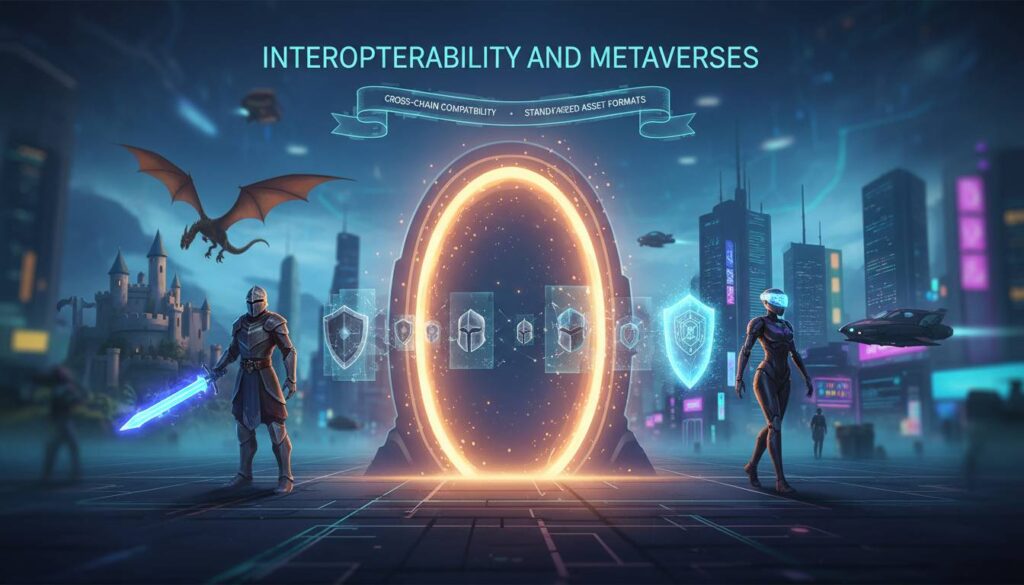
The blockchain space is fragmented. Different networks—Ethereum, Solana, Polygon, and dozens of others—don’t talk to each other easily. This became a real problem for gaming, since players stuck on one chain couldn’t use their assets elsewhere.
Cross-chain bridges started solving this. Assets created on one blockchain can now move to others, expanding the potential audience for game developers and giving players more flexibility. Projects built on different chains can collaborate. The industry is slowly accepting that closed ecosystems hurt everyone—users want to take their stuff wherever they want to go, not be locked in.
Artificial Intelligence Meets Blockchain Gaming
AI and blockchain are starting to combine in interesting ways. Some games use machine learning for smarter NPCs, dynamic storylines that adapt to player choices, and economic systems that adjust automatically to prevent inflation or exploitation.
AI tools also help developers understand player behavior, balance in-game economies, and catch cheaters. A few projects are using AI-generated art and 3D models to cut development costs. Whether this results in better games or just more low-effort garbage remains to be seen. Probably both.
Regulatory Developments and Industry Maturation
Governments started paying attention. Regulators worldwide are figuring out how to handle cryptocurrency transactions, NFT classification, and gaming that involves real money. This creates uncertainty—but also legitimacy. Clear rules help legitimate businesses while weeding out scams.
Industry groups formed to lobby for reasonable regulations. Some countries created sandbox programs letting blockchain gaming companies operate under lighter oversight while they prove they can follow rules. How this plays out will shape whether blockchain gaming goes mainstream or stays a niche.
The Future of Web3 Gaming
What’s coming next depends on who you ask. Underlying blockchain technology keeps improving—faster transactions, better user onboarding, layer-2 solutions that actually work. These improvements could address the biggest complaints: slow speeds and confusing interfaces.
VR, AR, and Web3 might eventually blend into something new—immersive worlds where your digital identity and assets carry weight. Some major tech companies and established publishers are positioning for this, investing in research and filing patents. Whether any of it actually delivers on the promise is a different question.
Frequently Asked Questions
What are blockchain gaming trends?
Blockchain gaming trends cover the new patterns in video games using blockchain, cryptocurrency, NFTs, and Web3 ideas. This includes play-to-earn models, actual digital ownership, decentralized governance, and cross-chain compatibility that set these games apart from traditional ones.
Is blockchain gaming profitable?
It depends. Some players made significant money, but crypto markets are extremely volatile. Most people don’t profit. Treat blockchain gaming as entertainment first, not an investment.
What is the biggest blockchain game currently?
The landscape shifts constantly. Axie Infinity, The Sandbox, Decentraland, and Illuvium have all held prominent positions at different times, but rankings change as new games launch and markets shift.
How do blockchain games make money?
Multiple ways: initial token sales, marketplace fees on player trades, premium features, and traditional monetization like cosmetics. Different games use different models, and they’re still experimenting.
Are blockchain games safe to play?
Some are legitimate. Many aren’t. Research projects thoroughly, check if smart contracts were audited, and only invest money you can afford to lose entirely. The crypto market has minimal regulation and plenty of fraud.
Will traditional gaming companies adopt blockchain technology?
Some already have, at least experimentally. Full adoption faces obstacles: player backlash, regulatory uncertainty, and technical challenges. Major publishers are watching and waiting to see how things develop.