
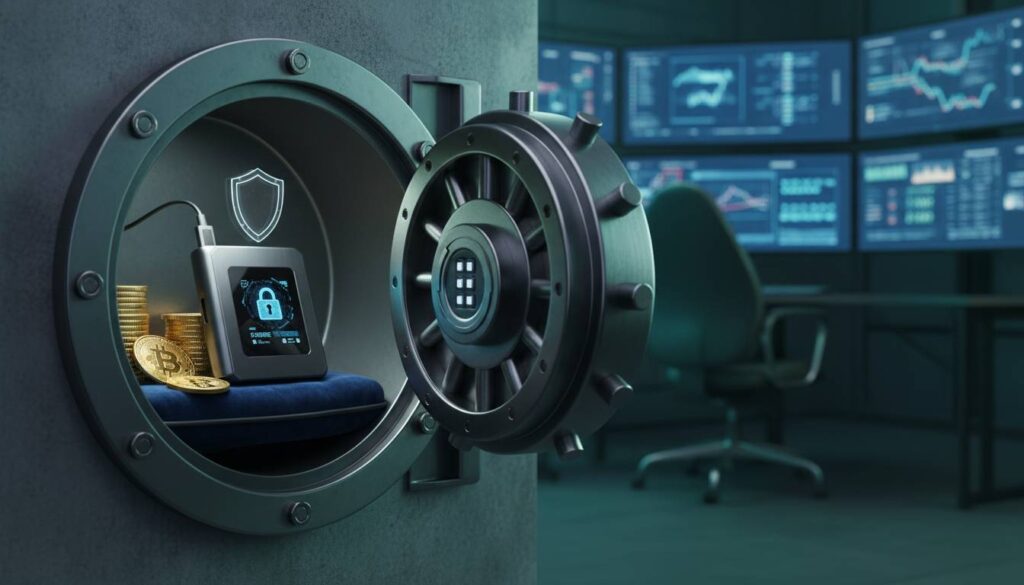
Securing your cryptocurrency requires a multi-layered approach combining hardware wallets, strong authentication, and vigilant practices. Unlike traditional bank accounts, crypto transactions are irreversible and your assets are only as secure as your weakest security practice. This guide covers everything from beginner-level precautions to advanced protection strategies used by institutional investors.
Understanding the Crypto Security Landscape
The cryptocurrency ecosystem lost approximately $3.8 billion to hacks and scams in 2022, according to Chainalysis data, though this figure dropped to $1.7 billion in 2023 as security practices improved. Individual investors account for a significant portion of these losses, with phishing attacks and compromised private keys being the most common attack vectors.
— Nightly (@Nightly_app) March 27, 2025
Unlike centralized financial institutions that can freeze or reverse transactions, cryptocurrency operates on a decentralized ledger where transactions cannot be undone once confirmed. This fundamental characteristic makes security entirely the user’s responsibility. When you hold your own keys, you have complete control—but that control comes with the obligation to protect those keys at all costs.
The threat landscape has evolved beyond simple password theft. Modern attackers employ sophisticated techniques including SIM-swapping, social engineering, malware injection, and fake exchange websites. Understanding these threats is the first step toward building an effective defense strategy.
Types of Crypto Wallets and Their Security Features
Choosing the right wallet is the foundation of crypto security. Each wallet type offers different trade-offs between convenience and protection.
Your digital assets are precious! 🛡️
This video breaks down 4 common cyber threats like phishing and malware that could put your crypto at risk
Watch now and learn to protect yourself!#KoinBX #SecurityFacts #mindblown #didyouknowfacts #cybersecuritytips #CryptoCommunity pic.twitter.com/2fEWuDHFye
— KoinBX (@KoinBX) July 21, 2025
Hardware Wallets
Hardware wallets are physical devices that store your private keys offline, making them immune to online hacking attempts. Leading options include Ledger and Trezor devices, which typically cost between $79 and $349. These devices require physical button confirmation for transactions, adding a critical layer of protection against remote attacks.
The primary advantage of hardware wallets is that private keys never leave the device. Even when connected to a compromised computer, the hardware wallet keeps your keys secure. For holdings exceeding a few hundred dollars, a hardware wallet becomes essential rather than optional.
Software Wallets
Software wallets include desktop applications, mobile apps, and browser extensions. Examples include Exodus, MetaMask, and Trust Wallet. These wallets offer convenience and accessibility but remain vulnerable to malware and device compromise.
One click. That’s all it took. 🚨
A fake email. A ZIP file. A compromised device.
In 2025, phishing + malware is the scam combo to watch — and it nearly cost one #Binance user everything.
Learn how to protect your crypto now. 🛡
Find out more 👉 https://t.co/vpaR2jw0Mq pic.twitter.com/0I6CHw38a6
— Binance (@binance) August 3, 2025
Software wallets are appropriate for smaller amounts you need for frequent transactions. Many users maintain a hardware wallet for long-term storage while keeping a software wallet with limited funds for daily use. This分层 approach balances security with usability.
Paper Wallets
A paper wallet involves printing your private keys and public address on paper, then storing it securely. While completely immune to digital attacks, paper wallets are vulnerable to physical theft, fire, water damage, and loss. Modern security practices generally favor hardware wallets over paper alternatives due to their superior user experience and comparable security when properly stored.
Custodial vs. Non-Custodial Options
| Feature | Custodial Wallet | Non-Custodial Wallet |
|---|---|---|
| Private Key Control | Exchange holds keys | You hold keys |
| Recovery Options | Account recovery available | Seed phrase only |
| Convenience | High | Medium |
| Security | Dependent on exchange | Fully your responsibility |
| Best For | Beginners, small amounts | Serious investors |
Custodial wallets, such as those provided by Coinbase or Kraken, hold your keys on your behalf. This means you can recover your account through traditional methods if you lose access. However, you inherit all the risks of the exchange—including hacks, insolvency, or account freezes. Most security experts recommend withdrawing funds to your own wallet for long-term storage.
Essential Security Measures for Your Digital Assets
Implementing basic security measures dramatically reduces your risk exposure. These practices form the foundation of any effective security strategy.
Strong Password Creation and Management
Create unique, complex passwords for every exchange and wallet account. A strong password should be at least 16 characters long, combining uppercase and lowercase letters, numbers, and symbols. Never reuse passwords across different platforms.
Password managers like 1Password, Bitwarden, or Dashlane can generate and store unique passwords securely. These tools encrypt your password vault with a master password that you must remember—make this master password exceptionally strong and never store it digitally.
Two-Factor Authentication (2FA)
Enable two-factor authentication on every account that supports it. However, not all 2FA methods offer equal protection:
SMS-based 2FA is the weakest option because attackers can perform SIM-swapping attacks to intercept verification codes. Security experts strongly recommend avoiding SMS-based 2FA for crypto accounts.
Authenticator apps (Google Authenticator, Authy) generate time-based codes on your device, making them resistant to interception. This approach is significantly more secure than SMS.
Hardware security keys (YubiKey, Titan) provide the strongest 2FA protection available. These physical devices must be present to authenticate, making them immune to phishing and remote attacks. For maximum security, use hardware keys for your primary exchange accounts.
Seed Phrase Protection
Your recovery seed phrase (typically 12 or 24 words) is the master key to your crypto. If someone obtains this phrase, they control your funds regardless of other security measures. Follow these critical practices:
Never store your seed phrase digitally. This means avoiding screenshots, cloud storage, password managers, and email. Digital storage creates attack vectors that sophisticated hackers can exploit.
Write your seed phrase on paper and store it in multiple secure locations. Consider using metal backup plates designed for seed phrase storage, which resist fire and physical damage better than paper.
Never share your seed phrase with anyone. No legitimate service will ever ask for your seed phrase. Treat any such request as a scam attempt.
Advanced Security Strategies
For significant crypto holdings, basic measures may not suffice. These advanced strategies provide defense-in-depth protection.
Multi-Signature Wallets
Multi-signature (multisig) wallets require multiple private keys to authorize a transaction. For example, a 2-of-3 multisig setup requires any two of three designated keys to approve a transfer. This means even if an attacker compromises one key, they cannot access your funds.
Multisig arrangements protect against single points of failure—including your own mistakes. Many high-net-worth individuals and organizations use 3-of-5 or higher threshold schemes, distributing keys across different locations and trusted parties.
Address Whitelisting
Many exchanges and wallets support address whitelisting, a feature that limits withdrawals to pre-approved addresses only. Enable this feature to prevent attackers from withdrawing to unknown addresses even if they compromise your account.
While whitelisting adds transaction friction—every new withdrawal address requires manual approval—this inconvenience provides substantial security against unauthorized transfers.
Air-Gapped Devices
For maximum security, consider maintaining an air-gapped computer that never connects to the internet. Use this device exclusively for signing transactions, generating new wallet addresses, and managing cold storage.
To transfer funds, you create an unsigned transaction on your regular computer, transfer it to the air-gapped device via USB, sign it there, and return the signed transaction to be broadcast. This isolation eliminates virtually all remote attack vectors.
Common Security Mistakes to Avoid
Understanding what not to do is equally important as implementing security measures. These common mistakes have cost investors millions.
| Mistake | Consequence | Prevention |
|---|---|---|
| Storing seed phrases digitally | Complete fund loss if hacked | Paper or metal storage only |
| Using SMS 2FA | SIM-swap attacks | Switch to authenticator app |
| Clicking links in unexpected emails | Phishing leading to credential theft | Always navigate directly to sites |
| Sharing transaction details publicly | Targeted attacks | Keep holdings private |
| Ignoring software updates | Exploitable vulnerabilities | Enable automatic updates |
One of the most prevalent mistakes is falling for phishing attempts. Attackers create convincing fake websites, emails, and social media profiles that mimic legitimate services. Always verify URLs carefully, especially when entering login credentials. Bookmark your exchange URLs and only access them through bookmarks rather than clicking links.
Another common error involves publicizing crypto holdings. Sharing wallet addresses or discussing portfolio size on social media makes you a target for sophisticated scams, including targeted phishing and extortion attempts.
What to Do If Your Crypto Is Compromised
Despite best practices, compromises can occur. Knowing how to respond quickly can minimize damage.
Immediately disconnect affected devices from the internet to prevent further unauthorized access. If your private keys were exposed, assume the wallet is compromised regardless of other protective measures.
Transfer remaining funds to a secure wallet if you still have access to any unaffected keys or accounts. Work quickly but carefully—panic-driven mistakes can compound losses.
Document everything including timestamps, transaction IDs, communications, and evidence of the breach. This information becomes critical for exchanges, law enforcement, and potentially recovering funds.
Report the incident to the FBI Internet Crime Complaint Center (IC3), local law enforcement, and the exchange involved. While recovery is rare, reports help authorities track criminals and may assist in future cases.
Check blockchain explorers to monitor the compromised address. If stolen funds move to an exchange, that exchange may be able to freeze the assets with proper legal documentation.
Frequently Asked Questions
Is it safe to keep crypto on exchanges?
Exchanges are convenient but carry counterparty risk. Large exchanges have strong security but remain attractive targets for hackers. For long-term holdings, withdraw your crypto to a personal wallet you control.
What is the safest way to store crypto for long-term holding?
Hardware wallets stored in secure physical locations provide the best combination of security and practicality for long-term storage. Consider using multisig setups for very large holdings.
Can I recover my crypto if I lose my hardware wallet?
Yes, if you have your seed phrase backed up securely. Hardware wallets generate your keys deterministically from the seed phrase, allowing complete recovery on a new device.
How often should I review my crypto security practices?
Review your security setup quarterly and whenever significant market events occur or you acquire new assets. Security threats evolve continuously, and your practices should evolve with them.
Should I tell my family about my crypto holdings?
Inform a trusted family member or executor about your holdings and how to access them in case of emergency. Without this information, your crypto could become permanently inaccessible upon incapacity or death.
What is the best 2FA method for crypto accounts?
Hardware security keys provide the strongest protection, followed by authenticator apps. Avoid SMS-based 2FA entirely for cryptocurrency accounts due to SIM-swapping vulnerabilities.
Conclusion
Securing cryptocurrency requires accepting personal responsibility for assets that exist entirely in digital form. The strategies in this guide—hardware wallets, strong authentication, seed phrase protection, and vigilant practices—form a comprehensive security posture appropriate for most investors.
Start by assessing your current setup against these recommendations. If you’re using SMS 2FA, exchange-held keys, or digital seed phrase storage, prioritize addressing these vulnerabilities immediately. For significant holdings, consider implementing multisig arrangements and possibly air-gapped storage solutions.
Remember that crypto security is not a one-time setup but an ongoing practice. Review your measures regularly, stay informed about emerging threats, and treat your digital assets with the same care you would apply to substantial physical wealth.