
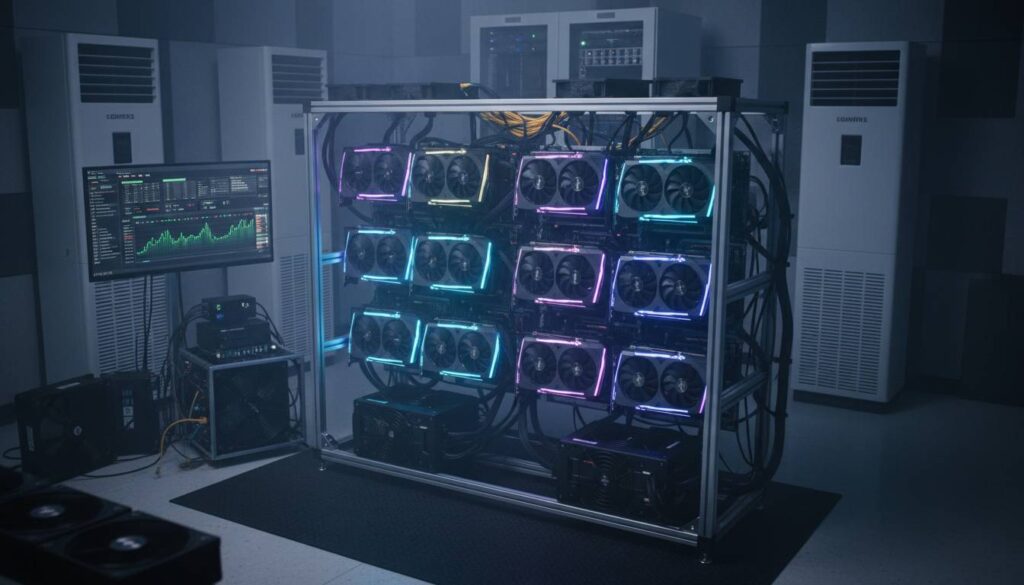
The global cryptocurrency mining market reached $2.9 billion in 2023, with individual miners and mining farms increasingly competing for block rewards. The software you choose directly impacts your hash rate efficiency, electricity costs, and ultimately your bottom line. This guide evaluates the leading crypto mining software tools, compares their features, and provides actionable strategies to maximize your mining profits in today’s competitive landscape.
Understanding Crypto Mining Software
Crypto mining software serves as the bridge between your hardware and the blockchain network. It executes the cryptographic calculations necessary to validate transactions and earn block rewards. The right software optimizes your hardware’s computational power while managing connection to mining pools, temperature monitoring, and automatic adjustments based on network difficulty.
New
byu/tossedAF inBitcoin
The distinction between software types matters significantly for profitability. ASIC miners require specialized firmware, while GPU miners need software compatible with their graphics cards. Some solutions operate as all-in-one platforms handling wallet connections, pool management, and performance tracking, while others focus narrowly on hash rate optimization.
Key Components of Mining Software:
The core functionality revolves around three elements. First, the mining engine executes the proof-of-work algorithms specific to your target cryptocurrency. Second, pool connectivity manages your connection to collaborative mining groups, distributing work and aggregating shares. Third, monitoring dashboards display real-time statistics including hash rate, temperature, power consumption, and earnings.
Software options range from command-line interfaces favored by experienced miners to graphical user interfaces designed for beginners. Cloud-based solutions now dominate commercial offerings, enabling remote management of multiple mining rigs from a single dashboard.
Top Crypto Mining Software Tools
The software landscape divides into beginner-friendly platforms and advanced solutions requiring technical expertise. Each category serves different user needs and hardware configurations.
Comprehensive Mining Platforms
NiceHash stands as the most accessible option for newcomers, operating a marketplace where miners sell hash power directly. The platform handles pool selection automatically, maximizing profitability by directing hardware toward the most lucrative algorithms. NiceHash supports NVIDIA, AMD, and ASIC hardware while providing built-in wallet functionality. The service charges a 3% fee on earnings, but the simplified interface and automatic optimization appeal to those lacking technical knowledge.
Iranians are Mining Bitcoin for $1,325 with 50x Returns Despite Electricity Shortages
byu/emperordas inCryptoCurrency
Hive OS targets serious miners managing multiple rigs. The cloud-based platform provides centralized control across unlimited devices, featuring robust monitoring, remote configuration, and automated failover between pools. Hive OS supports over 500 algorithms and integrates with major pool providers. The platform operates on a subscription model starting at $3 per month per worker, with enterprise pricing available for large-scale operations.
Minerstat offers professional-grade management similar to Hive OS, emphasizing data-driven optimization. The platform provides real-time profit switching, automatically directing mining power to the most profitable coins based on current market conditions. Minerstat’s Windows and Linux compatibility, combined with mobile apps for on-the-go monitoring, makes it popular among both hobbyists and commercial operations. Pricing starts at $1.99 per worker monthly.
Command-Line Miners for Advanced Users
CGMiner remains the gold standard for technical miners, offering maximum customization through extensive command-line options. This open-source software supports GPU and ASIC mining across multiple algorithms, with features like dynamic clocking, fan speed control, and detailed statistics logging. CGMiner requires configuration knowledge but delivers superior control over hardware performance. The learning curve is steep, but experienced miners often achieve higher efficiency than with GUI alternatives.
T-Rex Miner specializes in NVIDIA graphics cards, particularly for Ethash and other memory-hard algorithms. The software demonstrates excellent hash rate performance on modern NVIDIA GPUs, with support for Ethereum, Ravencoin, and related coins. T-Rex includes temperature monitoring, auto-restart capabilities, andstrap parameters for fine-tuning memory timings. The developer charges a 1% dev fee, standard among commercial miners.
PhoenixMiner targets Ethereum and other Ethash-based cryptocurrencies, offering strong performance on both NVIDIA and AMD hardware. The software provides detailed statistics, dual mining capabilities for certain coin combinations, and robust pool compatibility. PhoenixMiner includes a 0.5% development fee, lower than many competitors, making it attractive for high-volume operations.
Comparison Table: Major Mining Software
| Software | Best For | Hardware Support | Interface | Starting Price |
|---|---|---|---|---|
| NiceHash | Beginners | NVIDIA, AMD, ASIC | GUI | Free (3% fee) |
| Hive OS | Multi-rig farms | All types | Cloud | $3/worker/month |
| Minerstat | Profit switching | GPU, ASIC | Hybrid | $1.99/worker/month |
| CGMiner | Advanced control | GPU, ASIC | CLI | Free (open source) |
| T-Rex Miner | NVIDIA optimization | NVIDIA | CLI | Free (1% dev fee) |
| PhoenixMiner | ETH mining | NVIDIA, AMD | CLI | Free (0.5% dev fee) |
How to Choose the Right Mining Software
Selecting optimal software requires matching your technical capabilities, hardware configuration, and profit goals with available features. The decision impacts both immediate returns and long-term operational sustainability.
Assessing Your Technical Expertise
Beginners should prioritize platforms offering automated optimization, intuitive interfaces, and comprehensive customer support. NiceHash provides the lowest barrier to entry, handling algorithm selection and pool management automatically. The trade-off involves accepting higher fees and less direct control over mining operations.
Intermediate users typically benefit from platforms like Hive OS or Minerstat, which balance usability with advanced features. These solutions enable profit-switching strategies and detailed performance monitoring while maintaining manageable learning curves. The subscription costs offset through improved efficiency and reduced downtime.
Advanced miners comfortable with command-line interfaces often prefer CGMiner or specialized algorithm-specific miners. These tools maximize performance through direct hardware access and granular configuration options. The time investment in learning complex setups pays dividends in efficiency gains.
Hardware Compatibility Considerations
GPU mining requires software supporting your graphics card manufacturer and model. NVIDIA users have the broadest options, including T-Rex, CGMiner, and most GUI platforms. AMD miners should verify software compatibility, particularly for newer RDNA2 and RDNA3 architectures where driver support varies significantly.
ASIC miners face more limited software options, typically running manufacturer-provided firmware or compatible third-party solutions like CGMiner or BFGMiner. Network-specific ASICs (Bitcoin, Litecoin, Dash) require dedicated software matching their algorithm requirements.
Mixed mining operations benefit from unified management platforms handling diverse hardware types. Hive OS and Minerstat both support heterogeneous fleets, enabling centralized monitoring of NVIDIA GPUs, AMD cards, and ASICs from single dashboards.
Profit Optimization Features
Modern mining software offers increasingly sophisticated profit-maximization capabilities. Profit switching automatically redirects hash power to the most lucrative cryptocurrency based on real-time market data. This approach works particularly well with algorithm-flexible hardware capable of mining multiple coins.
Pool failover configuration prevents earnings loss during pool outages or connectivity issues. Quality platforms automatically redirect to backup pools, maintaining continuous mining operations. This feature proves essential for professional operations where downtime directly impacts revenue.
Maximizing Mining Profits: Strategies and Best Practices
Profitable crypto mining requires more than selecting software—it demands systematic optimization across hardware, electricity costs, and operational efficiency. Industry data reveals significant variance in miner profitability based on configuration choices.
Electricity Cost Management
Electricity represents the primary ongoing expense in crypto mining, typically consuming 60-70% of gross revenue for GPU operations. The U.S. Energy Information Administration reports average industrial electricity rates of $0.083 per kWh, though rates vary significantly by region. Mining operations in areas with excess renewable energy often secure rates below $0.04 per kWh, dramatically improving margins.
Software power management features enable dynamic adjustment of power consumption versus hash rate. Undervolting reduces electricity costs while maintaining acceptable performance, often achieving 20-30% power reduction with minimal hash rate loss. CGMiner and T-Rex Miner provide extensive power tuning options for experienced users.
Temperature and Hardware Longevity
Mining stress shortens hardware lifespans without proper thermal management. Graphics cards operating above 80°C experience accelerated degradation, potentially failing within months rather than years. Quality software includes temperature monitoring with automatic throttling or shutdown when thresholds exceed safe limits.
Hive OS and Minerstat provide cloud-based temperature tracking across all connected devices, alerting operators to cooling problems before hardware damage occurs. Remote management capabilities prove essential for operations spanning multiple locations, enabling response to issues without physical presence.
Pool Selection Impact
Mining pools aggregate computational resources, providing more consistent payouts than solo mining. Pool fees typically range from 0.5% to 3%, with payment structures (PPS, PPLNS, FPPS) affecting effective earnings. Pool size influences variance—larger pools provide steadier payments but distribute block rewards across more participants.
Major pools including Ethermine, F2Pool, and Poolin maintain excellent uptime and provide detailed statistics. Software integration varies, with some platforms offering one-click pool configuration while others require manual setup. The right pool depends on your target cryptocurrency, preferred payment schedule, and desired fee structure.
Common Mistakes to Avoid
New miners frequently undermine profitability through preventable errors. Understanding these pitfalls protects your investment and optimizes returns.
Ignoring Development Fees
Many miners overlook software development fees, focusing solely on hash rate performance. A miner producing 5% higher hash rate but charging 2% dev fee versus 0.5% may actually yield lower net earnings. Calculate effective profitability by accounting for all fees before selecting software.
Neglecting Software Updates
Mining software receives regular updates addressing performance improvements, security patches, and new algorithm support. Running outdated versions may miss significant efficiency gains or encounter compatibility problems with network changes. Schedule regular update reviews, particularly following major blockchain upgrades.
Overlooking Driver Compatibility
Graphics card drivers significantly impact mining performance, with specific versions often optimizing particular algorithms. Using outdated drivers commonly reduces hash rates by 5-15%. Research optimal driver versions for your hardware and software combination, maintaining backups of proven configurations.
Inadequate Monitoring
Mining operations require continuous monitoring for hardware failures, connectivity issues, and profit changes. Operating without alerting systems leads to extended downtime during problems, directly reducing earnings. Implement comprehensive monitoring through platform features or third-party tools, ensuring notification of issues regardless of your physical location.
Frequently Asked Questions
What is the best crypto mining software for beginners?
NiceHash offers the easiest entry point for beginners due to its automated algorithm selection, simplified interface, and minimal technical requirements. The platform handles all complex decisions including pool selection and profit optimization, allowing newcomers to begin mining within minutes. However, the 3% fee and less direct hardware control mean experienced users often migrate to more advanced solutions once they understand the fundamentals.
How much can I earn from crypto mining with the right software?
Earnings depend on hardware capability, electricity costs, and market conditions. As of 2024, a high-end NVIDIA RTX 4090 mining Ethereum Classic generates approximately $3-5 daily before electricity costs at average U.S. rates. Subtracting electricity ($0.50-1.50 depending on local rates) leaves $2-4 daily profit. ASIC miners like the Bitmain Antminer S19j Pro produce $10-15 daily profit under similar calculations, though requiring significantly higher initial investment.
Does free mining software exist without hidden fees?
Several legitimate free options exist, primarily open-source projects like CGMiner and BFGMiner. However, most commercial miners include development fees (typically 0.5-2%) deducted from earnings. “Free” software without fees often generates revenue through higher pool fees, less efficient algorithms, or other indirect mechanisms. Always calculate total costs including any dev fees before selecting software.
Can I mine crypto on my home computer?
Home computer mining is generally unprofitable for most cryptocurrencies due to insufficient hash power. Modern mining difficulty requires specialized hardware—even older ASIC miners vastly outperform consumer-grade processors. Exceptionally, certain coins with lower network difficulty (smaller cap cryptocurrencies) may still yield small returns on standard hardware, though electricity costs typically exceed earnings.
Is crypto mining software legal in the United States?
Crypto mining software itself is legal in the United States. However, miners must comply with relevant regulations including tax obligations on mining rewards (treated as income) and local zoning/energy codes for electrical usage. Some municipalities impose restrictions on commercial-scale mining operations. Ensure your operation meets local requirements before investing in hardware and software.
How often should I switch mining software?
Frequent switching isn’t necessary—stability typically outweighs minor optimization gains. Evaluate software changes when major updates occur, when your hardware configuration changes, or when profit calculations show meaningful improvements with alternatives. Many successful miners maintain consistent software for years, adjusting settings rather than platforms.