
Buying cryptocurrency has evolved from a niche activity into a mainstream financial pursuit, with approximately 17% of Americans—roughly 44 million people—having invested in or traded cryptocurrency according to recent Pew Research Center surveys. Yet for every successful investor, countless others have lost funds to scams, hacks, or simple mistakes. Learning how to buy cryptocurrency safely requires understanding not just where to click, but how the ecosystem works, where dangers lurk, and what protections actually matter. This guide walks you through the entire process from start to finish, with specific, actionable steps backed by current security practices and real market data.
Why Cryptocurrency Safety Matters More Than Ever
The cryptocurrency market reached a total capitalization exceeding $2.5 trillion in recent years, attracting both legitimate investors and sophisticated fraudsters. The Federal Trade Commission reported that crypto-related fraud losses exceeded $1 billion in 2022 alone, with victims losing an average of $2,600 per incident. These numbers represent real people who thought they were making smart investment decisions.
Start your first step into the world of cryptocurrency with Bitkub and enjoy exclusive privileges!
.
Simply make your first trade on Bitkub Exchange with any coin – "No Minimum" required – and get 1,000 KUB Gem instantly!💎💚
.
📣 Once you get KUB Gem,
Don't forget to redeem them… pic.twitter.com/wsN4KEOsYo— Bitkub.com (@BitkubOfficial) March 16, 2026
Unlike traditional bank accounts protected by the Federal Deposit Insurance Corporation, cryptocurrency holdings generally lack government-backed insurance. When funds vanish from a compromised wallet or an illegitimate platform, recovery options are extremely limited. This fundamental difference means that personal security practices aren’t optional—they’re the only protection between your money and potential loss.
Beyond external threats, beginners frequently make costly mistakes through simple errors: sending funds to wrong addresses, choosing incompatible wallets, or failing to back up recovery phrases. Understanding these risks before investing your first dollar isn’t being paranoid—it’s being smart.
Understanding Cryptocurrency Exchanges: Your Primary Gateway
Cryptocurrency exchanges serve as the primary marketplace where you can buy, sell, and trade digital assets. These platforms function similarly to stock brokers but operate in a largely unregulated environment that demands extra vigilance.
What should I use to store my Cryptocurrency safely?
It depends on where you are on your journey.
To help you, we've put together a full guide divided by:
– Beginner
– Mid
– Advanced
– Ultra-advanced usersYou can read it here 👇https://t.co/rj3tbEAyOE
— Cyfrin Updraft 🟩 (@CyfrinUpdraft) February 16, 2024
Centralized Exchanges vs. Decentralized Exchanges
Centralized exchanges (CEXs) like Coinbase, Kraken, Gemini, and Binance.US maintain user accounts, hold customer funds, and facilitate transactions through their internal systems. These platforms offer familiar interfaces, customer support, and convenience but require trusting a third party with your assets. When you buy crypto on Coinbase, for instance, you’re essentially an IOU holder—the exchange promises to credit your account but technically controls the underlying assets.
Decentralized exchanges (DEXs) like Uniswap, Curve, or PancakeSwap operate without intermediaries. Transactions occur directly between users through automated smart contracts. This eliminates counterparty risk—no company can freeze your funds—but introduces different risks including smart contract vulnerabilities, slippage losses, and significantly higher complexity for beginners.
For your first purchase, a reputable centralized exchange provides the best balance of safety and simplicity. Decentralized exchanges should only be used after gaining substantial experience and understanding of the technical risks involved.
Choosing a Secure Exchange: Key Evaluation Criteria
Not all exchanges are created equal. The collapse of FTX in late 2022, which locked out users from over $8 billion in customer funds, demonstrated that even major platforms can fail catastrophically. Evaluating exchanges requires looking beyond marketing claims to measurable security indicators.
Regulatory Compliance and Transparency
US-based exchanges face regulatory requirements that provide meaningful protection. Look for platforms registered with FinCEN as Money Services Businesses, and check whether they maintain state money transmitter licenses. Coinbase, Kraken, and Gemini publicly disclose their reserve proofs and maintain relationships with traditional banks—signs of operational legitimacy.
| Exchange | US Regulatory Status | Reserve Proof | Publicly Traded |
|---|---|---|---|
| Coinbase | Registered with FinCEN, state licenses | Yes | NASDAQ (COIN) |
| Kraken | Registered with FinCEN | Yes | Private |
| Gemini | Registered with FinCEN, NY BitLicense | Yes | Private |
| Binance.US | Registered with FinCEN | Limited | Private |
Exchanges operating primarily outside US jurisdiction may offer lower fees but provide limited recourse if problems arise. Your financial safety often correlates directly with regulatory compliance.
Security Features That Actually Matter
Effective exchange security extends beyond marketing slogans about “bank-grade encryption.” Prioritize platforms offering these specific protections:
Two-factor authentication (2FA) using authenticator apps (Google Authenticator, Authy) rather than SMS provides meaningful protection against account takeovers. SIM-swapping attacks, where criminals hijack your phone number, have emptied countless crypto accounts protected only by SMS codes.
Withdrawal whitelisting limits can prevent attackers from draining accounts even if they obtain login credentials. This feature restricts withdrawals to addresses you’ve pre-approved, adding a time delay for new addresses.
Cold storage policies indicate how much of customer funds remain offline, away from internet-connected systems. Major exchanges typically store the majority of assets in cold wallets, making them less vulnerable to hackers.
Setting Up Your Account: Security Foundation
Once you’ve selected an exchange, the account creation process establishes your security baseline. Mistakes made during setup persist throughout your entire investing career.
A Beginner’s Guide to Investing in Cryptocurrency
Cryptocurrency has transformed the financial landscape since Bitcoin’s debut in 2009. What began as an experimental digital currency has grown into a global phenomenon, with thousands of cryptocurrencies now available and a…
— Ivan D Tzar (@IvanDTzar) March 9, 2025
Email and Password Best Practices
Create a dedicated email address specifically for cryptocurrency activities. This isolation protects your primary email from phishing attempts targeting your crypto holdings and prevents a compromised primary account from becoming a gateway to your funds.
Strong, unique passwords generated by password managers provide essential protection. Avoid reusing passwords from other services—data breaches at unrelated companies have provided attackers with credentials they successfully try across cryptocurrency platforms.
Two-Factor Authentication Implementation
Install an authenticator app before creating your exchange account. Google Authenticator generates time-based codes that change every 30 seconds, while Authy offers cloud backup protection for your 2FA keys. When setting up 2FA, carefully save the backup codes the exchange provides—these become your recovery method if you lose access to your authenticator app.
Never enable 2FA through SMS text messages. Attackers have successfully hijacked phone numbers through social engineering, SIM-swapping, and corrupted insider access at mobile carriers. The added convenience of SMS codes isn’t worth the dramatically increased vulnerability.
Buying Your First Cryptocurrency: Step-by-Step Process
With account security established, you’re ready to make your first purchase. This process involves connecting funding sources, placing orders, and securing your acquired assets.
Funding Your Account
US exchanges typically offer several funding methods with different characteristics:
Bank transfers (ACH in the US) provide the lowest fees but may take 3-7 business days to clear. This delay prevents immediate trading but eliminates transaction fees for deposits.
Debit cards enable instant purchases but typically carry 3-5% conversion fees plus additional charges from the exchange. This method suits small initial purchases rather than large transfers.
Wire transfers work for larger amounts, usually exceeding $10,000, with fees around $10-25 per transfer and same-day or next-day availability.
Understanding Order Types
Market orders execute immediately at the best available price, appropriate when you want to buy quickly without watching price fluctuations. Limit orders let you specify a maximum price, executing only when the market reaches your target—useful for patient investors but requiring patience during volatile periods.
Start with market orders for your first purchase to ensure execution without complications. As you gain experience, limit orders can improve pricing during less urgent acquisitions.
Confirmation and Recording
Before confirming any purchase, double-check the transaction details: the amount in both fiat currency and cryptocurrency units, the current exchange rate, and any applicable fees. Cryptocurrency transactions are irreversible—sending funds to an incorrect address typically means permanent loss.
Record your transaction ID (TXID), a long alphanumeric string that uniquely identifies your transaction on the blockchain. This record becomes important for tax purposes and resolving any future disputes with the exchange.
Wallet Security: Protecting Your Assets Beyond the Exchange
While exchanges provide convenience, holding cryptocurrency on trading platforms creates ongoing risk. The safest approach moves assets to personal wallets where you control the private keys—the cryptographic passwords that authorize transactions.
Hot Wallets vs. Cold Wallets
Hot wallets remain connected to the internet through software applications. Mobile wallets like Trust Wallet or browser extensions like MetaMask provide easy access for frequent trading but remain vulnerable to malware, phishing, and remote attacks.
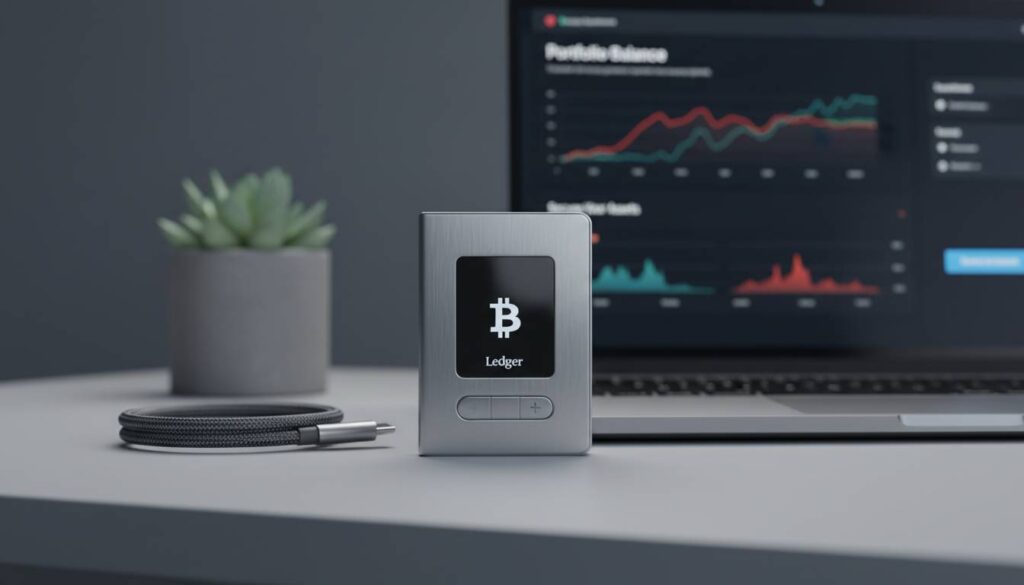
Cold wallets store private keys offline in specialized hardware devices. Ledger and Trezor hardware wallets cost $50-200 but provide substantially higher security for holdings you plan to hold long-term. Even if your computer is compromised, attackers cannot access funds stored on a hardware wallet without physical possession and your PIN.
For beginners holding less than $1,000 in cryptocurrency, exchange storage may be acceptable given the complexity of wallet setup. As holdings grow beyond this threshold, transitioning to a hardware wallet becomes increasingly important.
Recovery Phrases: Your Ultimate Security Responsibility
Cryptocurrency wallets generate a 12 or 24-word recovery phrase (seed phrase) during setup. This phrase can regenerate your private keys and restore access to your funds from any compatible wallet. Losing this phrase means permanent loss of all associated cryptocurrency—there’s no password reset, no customer support call, no appeal process.
Write your recovery phrase on paper and store it in a secure physical location. Never store it digitally, never photograph it, never type it into any computer or phone. Multiple copies in separate secure locations (safe deposit box, home safe) provide redundancy against fire or theft while maintaining physical security.
Common Cryptocurrency Scams and How to Avoid Them
Understanding attacker techniques prevents you from becoming a victim. Several scam patterns consistently recur in the cryptocurrency space.
Phishing Attacks
Attackers create fake websites, emails, or social media profiles impersonating legitimate exchanges or wallet providers. These fraudulent sites look nearly identical to real platforms but capture your login credentials or recovery phrases when you attempt to use them.
Always verify website URLs carefully—scammers use similar-looking domains (coimbase.com instead of coinbase.com, for example). Bookmark legitimate exchange websites and only access crypto platforms through saved bookmarks rather than clicking links in emails or messages.
Ponzi Schemes and Rug Pulls
Investment schemes promising guaranteed returns or impossibly high yields almost always defraud participants. Legitimate cryptocurrency investments carry substantial risk with no guaranteed profits. Promises of 1% daily returns or doubling investments within weeks indicate fraudulent operations.
rug pulls occur when developers create cryptocurrency tokens, build hype to attract investors, then suddenly sell all their holdings and abandon the project, leaving investors with worthless tokens. Research any token thoroughly before investing—check team identity (or lack thereof), examine whether liquidity is locked, and verify trading volume through multiple sources.
Fake Apps and Extensions
Malicious applications appearing in official app stores have stolen millions from unsuspecting users. Before downloading any cryptocurrency app, verify the developer name, check review dates and content, and consider downloading directly from official exchange websites rather than app stores.
Tax Implications Every Buyer Should Know
Cryptocurrency purchases don’t trigger immediate tax consequences in the US, but selling, trading, or disposing of cryptocurrency creates taxable events. The IRS treats cryptocurrency as property, meaning capital gains and losses apply to any transaction where you exchange crypto for fiat currency or other assets.
Keeping detailed records of every purchase, sale, and transaction becomes essential come tax season. Exchange transaction histories provide starting points but may not capture transfers between wallets or off-platform trades. Specialized tax software like CoinTracker or Koinly can aggregate data across multiple platforms.
If your cryptocurrency holdings represent a significant portion of your net worth, consulting a tax professional experienced with digital assets can prevent costly mistakes. The IRS has increased audit focus on cryptocurrency, making accurate reporting increasingly important.
Frequently Asked Questions
Is it safe to buy cryptocurrency through PayPal or Cash App?
Platforms like PayPal and Cash App allow purchasing cryptocurrency, but significant limitations exist. You cannot transfer purchased cryptocurrency off these platforms, meaning you cannot move it to your personal wallet. Additionally, these services typically don’t provide recovery phrases, meaning you don’t actually own the underlying cryptocurrency—you own a claim against the platform. For genuine cryptocurrency ownership and true security, use dedicated exchanges that enable withdrawals to personal wallets.
What’s the minimum amount of cryptocurrency I can buy?
Most exchanges allow purchasing fractions of cryptocurrency. You can buy $10 or less of Bitcoin on virtually any major exchange. However, remember that transaction fees often represent a larger percentage of small purchases. For your first purchase, $50-100 provides enough exposure to learn the process without excessive fee burden.
Should I use my real name when opening a crypto exchange account?
US-based exchanges require identity verification under anti-money laundering laws. Expect to provide your legal name, address, social security number, and government ID during account creation. This requirement is mandatory for compliant platforms—any exchange not requesting this information should be considered highly suspicious.
How do I know if a cryptocurrency exchange has been hacked?
Monitor news sources and communities like Reddit for reports of security incidents. Major hacks affecting reputable exchanges typically receive widespread coverage. After any reported hack, immediately check whether your exchange has suspended withdrawals—if they have, consider what limited actions you might take depending on whether you can withdraw funds. Enabling security features like withdrawal whitelisting before any incident provides protection against both future hacks and unauthorized access to your account.
Can the government take my cryptocurrency?
While cryptocurrency offers pseudonymous transactions, law enforcement has developed sophisticated chain analysis tools. Any cryptocurrency linked to illegal activity can potentially be seized through legal processes. For legitimate holders, the more immediate concern is accurately reporting gains for tax purposes—the IRS has issued summonses to major exchanges seeking customer records, demonstrating their ability to identify cryptocurrency owners through legal channels.
What should I do if I sent cryptocurrency to the wrong address?
Unfortunately, cryptocurrency transactions are irreversible by design. If you sent funds to an incorrect address belonging to a known exchange, contact their support immediately with transaction details—they may be able to help if the recipient account is identifiable. If the address belongs to a private wallet, recovery is essentially impossible. Always double-check addresses before confirming any transaction, and consider sending a small test amount first when sending to a new address.