The conversation around NFTs has evolved dramatically since the technology first captured public attention in 2021. While early attention focused primarily on digital art and speculative trading, the underlying capability of non-fungible tokens—verifiable ownership and transfer of unique digital or physical assets—has opened doors across industries far beyond collectibles. Understanding NFT utilities reveals how this technology functions as infrastructure for digital ownership, creating new possibilities for authentication, membership, content monetization, and asset management.
This exploration examines the practical applications reshaping how individuals and organizations interact with digital and real-world assets, from gaming ecosystems to supply chain verification.
Beyond Collectibles: The Foundation of NFT Utilities
NFTs derive their functionality from blockchain technology, which provides immutable proof of ownership and transparent transaction histories. Unlike cryptocurrencies such as Bitcoin or Ethereum, where each unit is identical to every other unit, NFTs represent unique items—this uniqueness is what enables their utility across diverse applications.
What Are the 7 Best NFT Marketplaces to Buy and Sell NFTs in 2026?
byu/SafePrestigious2662 inBitgetReddit
The “utility” aspect refers to what owners can actually do with their NFTs beyond simply holding them. Early NFT projects demonstrated this potential when platforms like Axie Infinity introduced play-to-earn mechanics where NFT characters could be leveled up and traded for real value. This demonstrated that NFTs could represent not just ownership but also functional elements within systems—game characters with evolving attributes, tickets granting access to events, or credentials verifying identity.
Starbucks launched its Odyssey program in 2022, transforming its loyalty model by offering NFT-based “Journey Stamps” that provided exclusive experiences to holders. Reddit’s Avatar program sold over 5 million avatars in 2022, demonstrating mainstream consumer adoption of NFT technology for identity expression. These implementations show utilities emerging where blockchain verification creates value: scarcity guarantees, ownership portability, and programmable benefits that follow the asset.
Nike’s acquisition of RTFKT and subsequent release of NFT sneakers that provide physical shoe redemption alongside digital wearables represents another category—hybrid utilities connecting digital ownership to physical goods. The common thread across these examples involves using blockchain’s verification capabilities to create new kinds of customer relationships and ownership experiences.
Gaming, Virtual Worlds, and Digital Economies
The gaming industry has embraced NFT utilities more extensively than any other sector, building entire economies around blockchain-based assets. Games like Axie Infinity, The Sandbox, and Decentraland have constructed virtual worlds where players own their in-game items, characters, and land parcels as NFTs—assets that retain value outside the game’s proprietary systems.
NFT Use Cases: Stocks
Continuing our discussion about RWAs (real-world assets), did you know that stocks and other equities can be tokenized?
When we think of RWA, the most popular usecase is currently real estate. There are several well-known platforms that offer the… pic.twitter.com/7RsOvnFHDf
— Coincreate (@CoincreateTeam) July 28, 2025
In traditional gaming, players spend hundreds or thousands of hours accumulating items and currency, but these assets remain locked within the game’s servers. If a game shuts down or modifies its terms of service, players lose everything. Blockchain-based games address this by allowing players to transfer their NFT assets across platforms or sell them on open marketplaces, creating genuine property rights within virtual environments.
The Sandbox, built on Ethereum, allows users to purchase LAND parcels as NFTs and develop experiences others can visit. Each LAND represents a piece of virtual real estate where creators build games, social spaces, or interactive experiences. This utility transforms passive gaming participation into active property ownership and content creation opportunities.
Guild of Guardians, Illuvium, and numerous other RPG and strategy games incorporate NFT characters and items that players can trade, upgrade, or use across different gameplay modes. Some games implement ” rentals” where owners can lend their powerful NFT characters to other players for a share of rewards—creating passive income opportunities from digital assets.
The virtual world category extends beyond gaming into social spaces and professional environments. Platforms like Decentraland and Somnium Space host virtual events, galleries, and meetings in NFT-owned spaces. Meta has announced plans for NFT integration across Facebook and Instagram, signaling mainstream adoption of virtual world utilities.
Identity Verification and Credentials
NFT utilities extend into identity management, offering solutions for verifying credentials, certifications, and personal attributes without centralized databases vulnerable to breach or manipulation. Educational institutions, professional certification bodies, and organizations increasingly explore blockchain-based credentials as tamper-proof alternatives to traditional certificates.
CMV: Bitcoin and crypto as a whole has peaked. It will soon go the way of NFT's and the tulip craze of 1637.
byu/daddysgirl794 inchangemyview
The University of Oxford participated in a pilot program issuing blockchain-verified diplomas, allowing employers to confirm credential authenticity through direct blockchain verification rather than contacting the institution. Similar programs exist at MIT, Harvard, and numerous other universities exploring how NFT credentials might reduce credential fraud—estimated to cost employers billions annually in hiring mistakes.
Professional credentials benefit similarly. Medical boards, legal associations, and industry certification organizations can issue NFT-based credentials that persist throughout a professional’s career. Unlike paper certificates that can be lost or damaged, blockchain credentials remain verifiable indefinitely. When professionals move between jurisdictions or employers, instant verification replaces lengthy background check processes.
Beyond formal credentials, NFT utilities enable reputation systems and achievement tracking. A developer might accumulate NFT-badges representing completed projects, open-source contributions, or community participation—portable proof of capabilities that follows them across platforms and employers. This approach could transform hiring practices by creating verifiable achievement records rather than relying solely on self-reported experience.
Identity utilities also address digital identity challenges in an era of increasing online interaction. NFT-based identity tokens could represent Driver’s licenses, passports, or membership cards—allowing selective disclosure of personal information while maintaining cryptographic verification. Projects like Polygon ID are building the infrastructure for this type of verifiable credential system, where users control which attributes to reveal without exposing complete identity documents.
Membership, Access, and Loyalty Programs
Organizations discovering NFT utilities frequently focus on membership and access control, finding that blockchain-based systems offer advantages over traditional loyalty programs. NFT memberships can grant exclusive access to events, content, communities, or services while providing transparent verification and programmable benefits that traditional membership systems cannot easily replicate.
Now that the NFT bubble is all burst, are we left with any useful technology or was it pure hype?
byu/JoeBrownshoes inNoStupidQuestions
The Bored Ape Yacht Club became the most famous example when its NFT collection provided members exclusive access to virtual and physical events, a collaborative storytelling experience, and commercial licensing rights for their specific ape image. Members received tangible benefits—event invitations, merchandise drops, and community connections—creating membership value that extended far beyond the digital image itself.
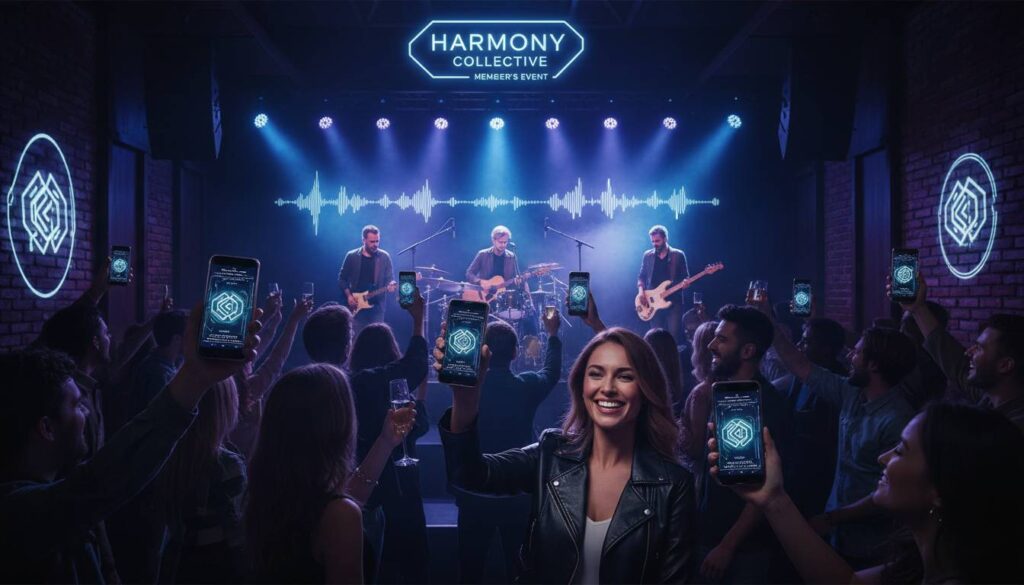
This model has proliferated across industries. Professional sports teams issue NFT season ticket memberships with unique benefits. Music artists release NFT collections granting holders access to exclusive concerts, meet-and-greets, or early ticket purchasing. This approach shifts fan relationships from transactional to ownership-based, creating genuine membership in communities rather than simple customer relationships.
Reddit’s Collectible Avatars program demonstrated mainstream accessibility, selling millions of NFT avatars that provide community status and potential future benefits without requiring technical knowledge or cryptocurrency holdings. The program integrated smoothly with existing Reddit accounts, abstracting away blockchain complexity while delivering NFT utility.
The loyalty program application is particularly promising for businesses. Traditional loyalty points suffer from inflation, limited transferability, and central control that can change program terms arbitrarily. NFT-based loyalty tokens could be tradable on secondary markets, providing customers actual ownership of their accumulated benefits. Programmable expiration rules and tiered access create marketing flexibility while giving customers portable, verifiable loyalty assets.
Real-World Asset Tokenization
One of the most significant NFT utilities involves tokenizing real-world assets—converting physical property rights into blockchain tokens that enable fractional ownership, improved liquidity, and streamlined transfer. Real estate, artwork, commodities, and business equity all represent asset categories where tokenization creates substantial advantages.
Real estate tokenization allows property ownership to be divided among multiple investors, reducing minimum investment thresholds while enabling 24/7 trading on secondary markets. Traditionally, real estate investment requires substantial capital and involves lengthy closing processes. Tokenized real estate can be traded in minutes rather than weeks, and fractional ownership enables portfolio diversification that was previously available only to institutional investors.
Companies like Propy have implemented real estate tokenization, completing transactions where property deeds are represented as NFTs and recorded on blockchains. This approach streamlines the closing process, reduces fraud risk through transparent ownership records, and enables international investment without local legal complexity.
Art and collectibles have seen particularly active tokenization. Fractional ownership platforms allow multiple investors to purchase shares of valuable artwork, with NFTs representing ownership fractions. This democratizes access to art investment while providing provenance verification that addresses authentication challenges that have plagued the art market.
Supply chain applications represent another asset tokenization category. Companies track products through supply chains using NFT-based certificates that verify authenticity, origin, and handling. A luxury good might carry an NFT documenting its manufacture, shipping, and retail arrival—information valuable to consumers concerned about counterfeits and companies managing complex global supply networks.
The tokenization of intellectual property creates interesting utility possibilities. Musicians and authors might tokenize royalty rights, selling NFT shares that pay holders ongoing royalties while providing creators upfront capital. This approach to rights management could revolutionize creative industries where traditional royalty structures often disadvantage artists.
DeFi Integration and Financial Applications
The decentralized finance ecosystem has developed numerous NFT utilities that treat non-fungible tokens as financial instruments. These applications treat NFTs as collateral for loans, generate yield from NFT holdings, and enable sophisticated financial arrangements impossible with traditional assets.
NFTfi and similar platforms enable users to use their NFTs as collateral for cryptocurrency loans. A borrower deposits a valuable NFT, receives crypto based on the asset’s estimated value, and repays the loan with interest to retrieve their NFT. If they default, the NFT transfers to the lender. This utility transforms illiquid NFT holdings into working capital without requiring asset sales.
Fractionalized NFT protocols allow groups of users to collectively own expensive NFTs. A blue-chip NFT collection might be too expensive for individual purchase, but fractionalization creates governance tokens representing ownership shares. These shares can be traded on decentralized exchanges, creating liquidity for assets that previously had no secondary market.
Royalty enforcement represents another financial utility built into NFT standards. Creators can program automatic royalty payments into NFT smart contracts—every time an NFT resells, a percentage goes to the original creator. This solves a persistent challenge in creative industries where secondary market sales generate no creator compensation. OpenSea and other marketplaces enforce creator royalties, which typically range from 2.5% to 10% of transaction values.
Staking NFT utilities allows holders to lock their NFTs in return for platform tokens or rewards. Some gaming NFT projects implement staking where holding character NFTs generates in-game currency or governance tokens. This creates passive income from assets that might otherwise sit idle, increasing the return profile of NFT investment.
Content Creation and Creator Economy
NFT utilities are transforming content creation by enabling direct creator-to-audience relationships without intermediary platforms. This application addresses long-standing challenges in creative industries where platforms capture disproportionate revenue shares while creators bear platform risk.
Musicians have been particularly active in exploring NFT utilities for music distribution. When artists release music as NFTs, they can capture primary sales revenue and program ongoing royalties from secondary market transactions. This creates sustainable income models where each sale—whether initial or resale—benefits the artist. Electronic musician 3LAU sold an album as NFTs for over $11 million in 2021, demonstrating the potential for direct artist-to-fan distribution.
Writers and journalists explore NFT utilities for publishing. Articles or books can be released as NFTs with programmed scarcity—only specific numbers of copies available—while readers receive verifiable ownership. Subscription models can be implemented through NFTs with expiration dates that grant access to ongoing content during the subscription period.
The creator economy utility extends to content licensing. An NFT can represent licensing rights to use underlying content—images, videos, music, or writing. Smart contracts automatically enforce licensing terms, track usage, and process payments, reducing the legal complexity and transaction costs that typically discourage licensing arrangements.
Gaming content creators benefit similarly. Streamers and content producers can release NFT collectibles featuring memorable moments, clips, or artwork. These utility-bearing NFTs give fans tangible digital memorabilia while providing creators ongoing revenue from secondary sales.
Frequently Asked Questions
What makes an NFT “utility” versus just a collectible?
A utility NFT provides functional benefits beyond ownership and display. This includes access to events, exclusive content, voting rights in communities, in-game advantages, redemption for physical goods, or financial features like staking rewards. Collectibles primarily derive value from aesthetics and rarity, while utility NFTs solve practical problems or provide tangible benefits.
Can NFTs be used for legitimate business applications?
Yes. Major companies including Nike, Starbucks, Reddit, and Adidas have implemented NFT programs for customer engagement, loyalty programs, and brand experiences. Beyond consumer applications, businesses use NFTs for supply chain verification, credential management, intellectual property licensing, and real estate tokenization. The technology provides genuine utility for authentication, ownership tracking, and programmable agreements.
Are NFT investments risky?
NFT investments carry substantial risk including extreme volatility, lack of regulatory protection, market manipulation concerns, and the possibility that projects fail to deliver promised utilities. Unlike securities, most NFTs lack consumer protections. Investors should understand they may lose entire investments and should only allocate capital they can afford to lose. Utility value depends entirely on projects delivering promised benefits.
How do I determine if an NFT has real utility?
Evaluate the project’s roadmap, team credentials, community engagement, and whether promised utilities actually function. Ask whether utilities create genuine value or merely claim novelty. Established projects with working utilities, transparent operations, and legitimate business models generally present lower risk than projects with vague promises or anonymous teams. Utility should be verifiable through actual use rather than theoretical.
What industries will see the most NFT utility adoption?
Gaming, identity/credentials, real estate, finance, and membership/community applications show strong adoption potential. Gaming has established market presence. Identity applications address genuine problems with current systems. Real estate tokenization addresses liquidity and access challenges. Financial applications continue evolving rapidly. Membership programs appeal to brands seeking customer relationship innovation.
Do I need technical knowledge to use NFT utilities?
Many utility NFT applications now abstract away blockchain complexity. Platforms like Reddit implemented NFT avatars that integrate with existing accounts. Traditional businesses accept fiat payment for NFT purchases and manage blockchain technicalities. However, advanced utilities involving DeFi, self-custody, or platform-specific interactions require technical understanding of wallets, networks, and smart contracts.
Conclusion
NFT utilities have evolved far beyond the speculative art trading that initially captured public attention. The technology’s core value—verifiable, portable, programmable ownership—enables applications across gaming, identity, membership, asset management, finance, and content creation. Organizations from Fortune 500 companies to independent creators are discovering practical implementations that solve real problems and create genuine value.
The trajectory suggests continued utility expansion rather than contraction. As infrastructure matures and user experience improves, NFT adoption will likely accelerate in areas where blockchain’s unique capabilities—immutable verification, programmable rules, and ownership portability—address genuine needs. Understanding these utilities positions individuals and organizations to evaluate opportunities as the technology matures beyond its early experimental phase.
The most promising utilities share common characteristics: they solve problems that previous technology addressed poorly, they create value for participants beyond speculation, and they build on legitimate business models rather than hype-driven token appreciation. These utility-focused applications will likely define the sustainable future of non-fungible token technology.